


The Avengers Endgame Time Travel Conundrum – EXPLAINED
Originally Posted on November 18, 2019
WARNING: Contains spoilers regarding Avengers: Endgame.
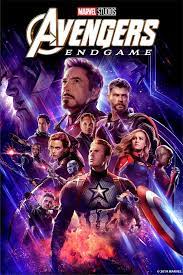
Marvel Studios’ Avengers: Endgame is in the news again for two major reasons: The recent launch of the new video streaming site Disney Plus which the movie’s presence is certainly a major selling point, and the coming Academy Awards season in which it’s revealed that Robert Downey Jr is indeed being considered for a Best Actor nomination for his role as Tony “Iron Man” Stark in the film (I personally think the movie itself should be nominated for Best Picture, but that’s a subject for another time).
Maybe it is just a huge coincidence that the idea for this essay came into my head at this very time – actually, it probably isn’t, since the idea came after numerous re-watchings of the movie via the aforementioned streaming site. Still, it seems like as good a time as any to present this theory that came to me to try and settle what might still be the only major issue viewers have on the Marvel Cinematic Universe’s magnum opus.
Because even though Endgame definitely provided one of the most satisfying conclusions to any film series ever, there still remain significant plot holes in how they got to that conclusion, particularly in regards to time travel and how we as consumers of fiction were made to believe this fictitious pseudo-science always worked. It is here that I will attempt to fill in these holes and explain how everything in the movie worked out.
For those not aware of what the movie is about, here’s the basic summary: Five years after the Mad Titan Thanos used the Infinity Stones to wipe out half of all life in the universe and then destroyed the Stones to prevent anyone from undoing his work, the remnants of Earth’s Mightiest Heroes have discovered a possible plan to fix everything – use the temporal peculiarities of the Quantum Realm to travel back in time, retrieve the Stones from the past and use them to undo Thanos’ mass murder. They must do this, however, without changing anything else that has occurred in the past five years; this is the only way Tony Stark agrees to help, as he insists he must be allowed to keep what he has gained in that time – specifically, his daughter Morgan.
Thus, the movie’s writers, Christopher Markus and Stephen McFeely, have a problem. They must make a story where the Avengers go back and take artifacts from the past and return to their time with them, but the present they return to cannot have been changed in any way from the actions they performed in the past – which, of course, contradicts what most people have been told how time travel works in almost every other time travel themed work of fiction ever.
This paradox is brought up in the movie itself, as Scott “Ant-Man” Lang and James “War Machine” Rhodes bring up two questions: 1. Won’t taking the Infinity Stones in the past mean Thanos will never get them, so the problem is already solved, and 2. Wouldn’t it then be even better to go further back and outright kill Thanos as a baby? They bring up several time travel movies and TV shows, including Star Trek, Back to the Future, The Terminator, Quantum Leap, Bill and Ted’s Excellent Adventure and even Hot Tub Time Machine, to say how they’ve always figured that’s how time travel works. Bruce “The Hulk” Banner immediately dismisses them with the following:
“I don’t know why everyone believes that, but that isn’t true. Think about it. If you travel to the past, that past becomes your future, and your former present becomes your past – which can’t now be changed by your new future!”
It seems like an excessively convoluted way to explain how changing the past doesn’t change the future while not really explaining anything. However, there IS one way to effectively explain how this can possibly happen – IF you take one of the few works of fiction related to time travel that Lang and Rhodes DIDN’T mention.
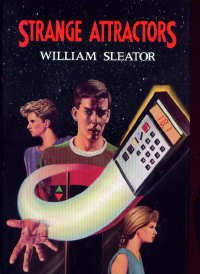
That would be William Sleator’s 1990 book Strange Attractors, which I happened to read back in junior high (roughly about the same time the book was originally published). I’ll spare you the full details of the plot, but here’s the time travel theory the book presents: When you travel back in time, you end up splitting reality into two timelines, and the second, just-created timeline is the one you actually travel to. It is possible to return to your original timeline provided you return at the exact moment you left or later, but the actions you perform in “the past” only affect the second timeline. You can’t change what has already happened in your original timeline. (UNLESS, of course, in the case of this movie, you have the time-and-reality-altering powers of the Infinity Stones.) This may be very similar to the “multiple timeline theory” that has been presented to explain the complexities of the Legend of Zelda video game series.
One can argue that this is what happens in Avengers: Endgame. When the Avengers travel back in time, they create a new timeline, and this is the timeline where they get (most of) the Infinity Stones they need and then take them back to their timeline. It is in this new time line where:
– Thor and Rocket extract the Reality Stone-containing Aether from Thor’s old love Jane Foster.
– Rhodes and Nebula get the Power Stone before Peter Quill steals it on the planet Morag.
– Black Widow and Hawkeye, in one of the most gut-wrenching moments of the whole movie, work to obtain the Soul Stone before Thanos discovers its location.
– Steve “Captain America” Rogers gets Loki’s scepter with the Mind Stone away from the SHIELD/HYDRA agents that took it after The Battle Of New York (I always wondered how HYDRA got ahold of the scepter!).
Of course, the Avengers are unable to get the Tesseract with the Space Stone, and Loki escapes with it. Therefore, Steve and Tony must travel FURTHER back in time to 1970 where they can acquire, in the same location, both the Tesseract and enough Pym Particles needed to return to their timeline. By this logic, they have now created a THIRD timeline, but one that we won’t be discussing that much of here.
Now the Avengers – specifically, Bruce – do promise to return the Stones to their time(s), but this still contains plot holes. For example, the Space, Reality and Mind Stones have to be extracted from the Tesseract, Aether and Loki’s scepter respectively, and we never see them returned to these receptacles in any way when Steve agrees to return all the stones (I know, I’ll get to THAT later). So we have to assume that even if the Stones were returned as if they never left, many of them are still not returned in the exact condition they left in, which should then still disrupt the course of events that were supposed to take place after the points in time the Stones were taken from (HYDRA could not have gotten back the scepter, Loki could not have stolen the Tesseract from the falling Asgard during Ragnarok, etc.). The only way this can make sense is that the disruptions DID happen… just not in the original timeline the Avengers traveled from but in a new one(s) they created by time traveling in the first place.
In fact, when the Ancient One is at first reluctant to give Bruce the Time Stone because, according to her, taking the Stones “may benefit your reality but my new one, not so much,” it seems the movie is indeed outright stating that the “past” the Avengers traveled to is another timeline altogether!
This brings us to Thanos and how the Avengers are ultimately able to kill him twice in the same timeline. In the original timeline, Thanos is killed five years earlier after revealing he destroyed the Stones when Thor “aims for the head this time.” He dies having accomplished his goal. However, by time traveling, the Avengers created a second Thanos with the second timeline, and this Thanos discovers that his other self succeeded and the Avengers are now trying to undo what he did in their timeline. Unable to accept this (and perhaps believing he now can’t get the Stones since the Avengers are taking them away), Thanos from the second timeline proceeds to jump himself into the first timeline with the intent of destroying the Avengers for good, using the Stones they collected to wipe out ALL of reality and then re-create it in his own image. He fails to do this because Tony uses the Stones first to wipe Thanos and all his followers out of existence.
Thus, we can assume that, in the second timeline (in addition to Loki never being imprisoned for his crimes on Asgard nor dying after the Asgardians fled Ragnarok, instead, escaping and thus setting up the forthcoming Loki series on Disney Plus), Thanos never used the Stones to wipe away any life at all, because he did not live long enough to acquire them all.
Now, this theory does of course have one major plot hole of its own, and it comes at the very end of the film: How did Steve Rogers appear again in the first timeline after choosing to not go back there after returning all the Stones and to instead remain in the second timeline with his old love Peggy Carter? Well, the answer can simply be: He DID – just not exactly when and where he was planned to. Bruce said after the attempt to retrieve him: “He blew right by his time stamp; he should be here!” Steve did return; he just returned a smidge later in a slightly different location – the location just a few yards away where he waited for Sam and Bucky to find him. It’s very likely he chose to come back to the first timeline after Peggy passed away in the second, and he basically chose to return on his own terms, much like he had chosen to live the rest of his life after returning the Stones the way he wanted to. He simply had saved the Pym Particles and suit those 70 years or so knowing he would return one day, and came back with the Captain America Shield from the second timeline (the shield from the first timeline was destroyed in the final battle with Thanos, remember) so he could pass it and his legacy on to Sam.
Now, I make no claim that anything I just stated is in fact what actually happened in the film; I have made no contact with Mr. Markus, Mr. McFeely or the Russo brothers to confirm this. Heck, it’s very possible that the plethora of movies and TV series Marvel Studios has planned for the next phases of the MCU will completely tear apart everything that I just proposed happened. In doing so, what happens in those upcoming productions may convolute things so much that we’ll begin to pine for the days of Chris Claremont’s writing.
But for now, it seems in my view that this is the best way to explain how the Avengers used time travel to restore their lives without creating a time paradox that should have caused a chain reaction that would unravel the very fabric of the space-time continuum and destroy the entire universe (or at least a very localized destruction limited to merely their own galaxy).